

The $1500/Night Problem: When Luxury Tourism Blocks the Great Migration
Hello Wayfinders!
The images are stunning. The service is, undoubtedly, world-class. When a brand like The Ritz-Carlton opens a lodge in the Maasai Mara, it garners global attention. But the conversation surrounding the opening of their ultra-luxury lodge near the Sand River needs to move past the glossy photos and into the core question of ethical travel and conservation legacy.
At Hippy Safaris, we believe the most meaningful adventures are those that leave a positive footprint. This recent development, however, presents a stark example of the conflict between unregulated tourism development and the uncompromising needs of the wild.
The Non-Negotiable Territory: Why Location is Everything
The core of this controversy lies in geography. The new lodge is situated on the Sand River, a critical location within the wider Mara ecosystem.
This area is not just a scenic spot; it is a primary, non-negotiable wildlife migration corridor. This is the ancient, essential pathway used by millions of wildebeest and zebra during the annual Great Migration—a lifeline they have followed for millennia to access water and grazing.
When permanent structures are placed in these critical bottlenecks, the consequences are severe:
Habitat Fragmentation: Development breaks up the natural, continuous path of the migration.
Stress & Detour: Animals are forced to detour, increasing stress, energy expenditure, and exposure to predators in unfamiliar areas.
Ecological Threat: Ultimately, unchecked development in these corridors threatens the success and even the future survival of the Great Migration itself.
The question isn't whether luxury is permitted; it's whether luxury development has the right to risk the continent's greatest ecological event.
The Fight for the Future: Local Heroes and Legal Battles
Fortunately, the silence around this development has been broken by fierce opposition from those who know the land best: the local communities and dedicated conservationists.
The legal and community resistance has been powerfully championed by heroes like Dr. Meitamei Olei Depash. Dr. Depash and others are fighting in court to uphold the voice of local communities and conservation laws, asserting that the ecological needs of the Mara must supersede the profits of exclusive tourism.
This resistance reminds every traveler that your money in Africa does not just buy a view; it funds a political and ecological reality.
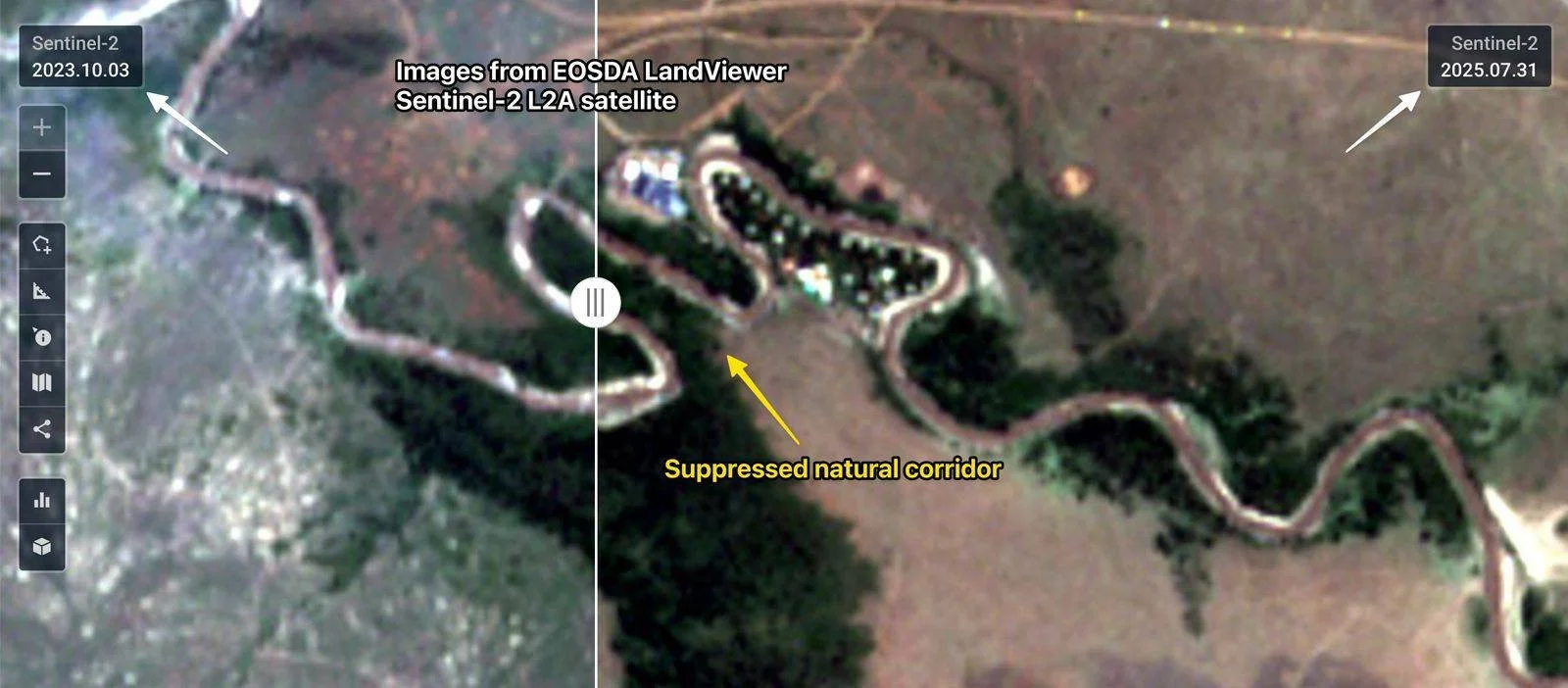
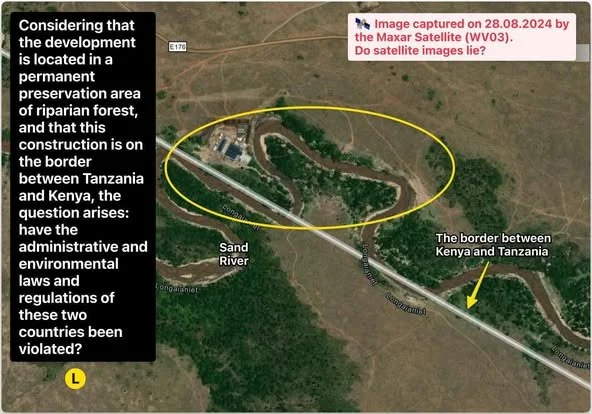
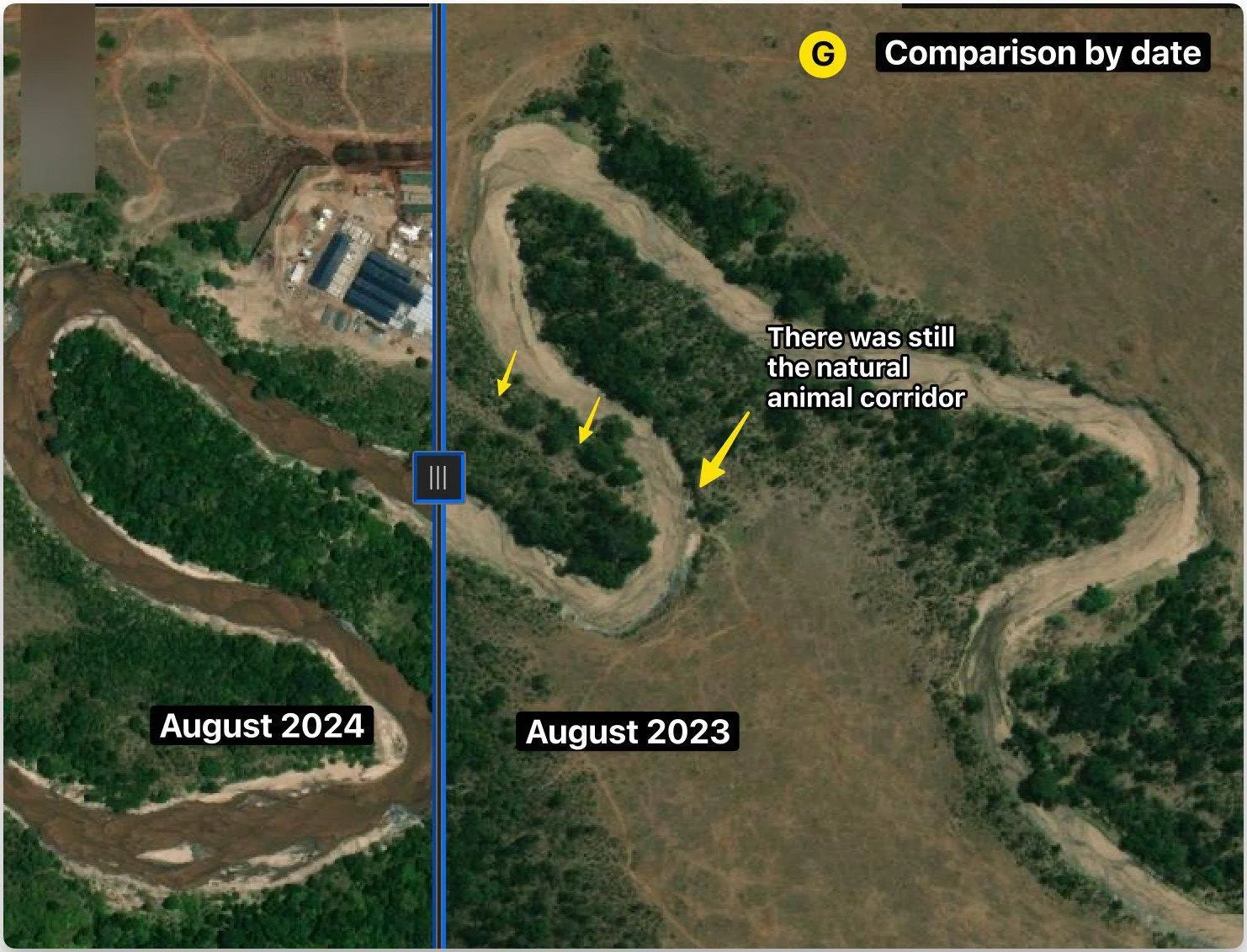
Where the lodge is situated
The Wayfinder's Choice: Luxury with Integrity
This controversy forces a critical choice for every traveler planning a high-end safari: Is your trip an ethical investment in the future of the wild, or is it simply luxury without integrity?
At Hippy Safaris, we advocate for 'Life-Seeing'—choosing lodges and conservancies that are actively enhancing the conservation model, not challenging it.
When planning your trip, ask these essential questions:
Is this lodge in a critical corridor? (We actively choose partners who protect, not obstruct, essential habitats.)
Does my money truly stay local? (Your investment must directly empower the local communities who are the land's original guardians.)
Does the lodge promote Quality Over Crowds? (We choose partners who limit vehicles and prioritize the animal's well-being for a better, more respectful experience.)
The time for blind tourism is over. We can have an incredible, luxurious, and exclusive safari that supports conservation. By voting with your money, you determine the future of the Maasai Mara's legacy.
